Tableware in the 18th century: a tête-à-tête lunch
Tableware in the 18th century: a tête-à-tête lunch
Tête-à-tête coffee and tea service
Royal Porcelain Manufactory of Meissen
Hard porcelain
Circa 1780
Manufacturer's mark: Two crossed blue swords and a six-pointed star
(Marcolini period)
Inventory no. 71/104
Collection: Department of Decorative Arts - Grand Curtius, Liège
Purchased in 1971
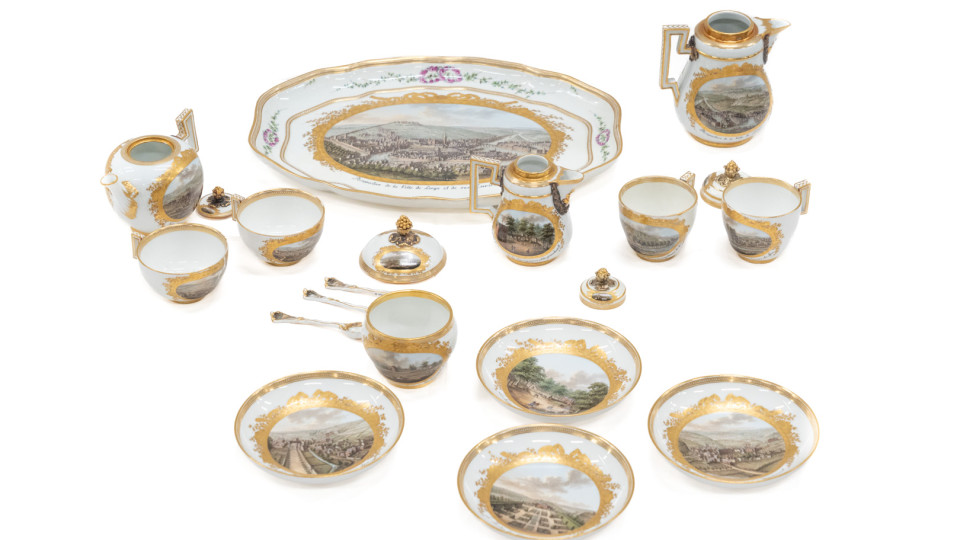
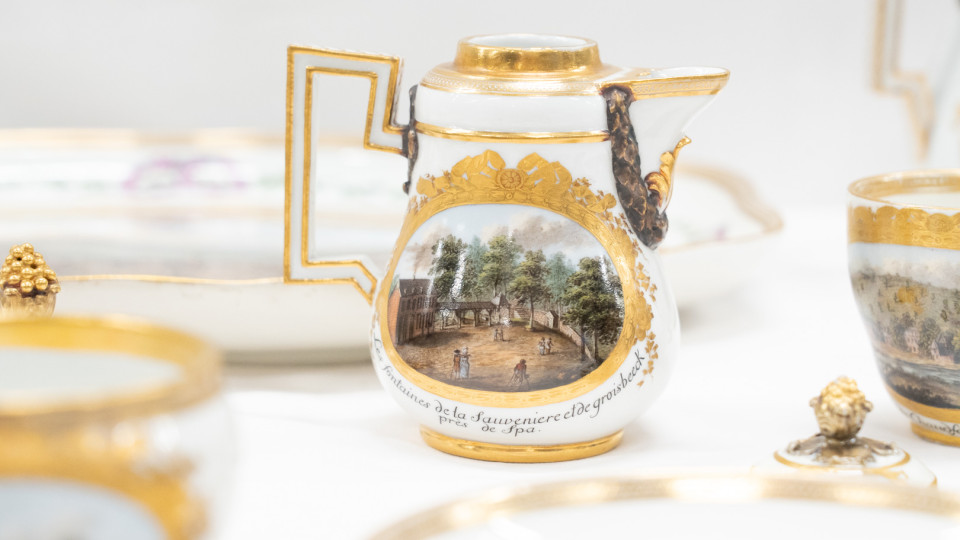
The consumption of hot beverages such as tea, coffee, and hot chocolate became very fashionable in bourgeois circles in the 18th century and often constituted a special moment in domestic life. Around this ritual , so-called ‘lunch’ services developed: these were porcelain sets, including a tray matching the containers, for one or two people, hence the names ‘égoïste’ (selfish) and "tête à tête" (one-on-one). Unlike a table service, the ‘déjeuner’ was used in private apartments, comfortably seated in bed or in an armchair, and generally without the use of servants. The model and decoration of the service reflected the taste and fortune of its owner.
A sumptuous decoration...
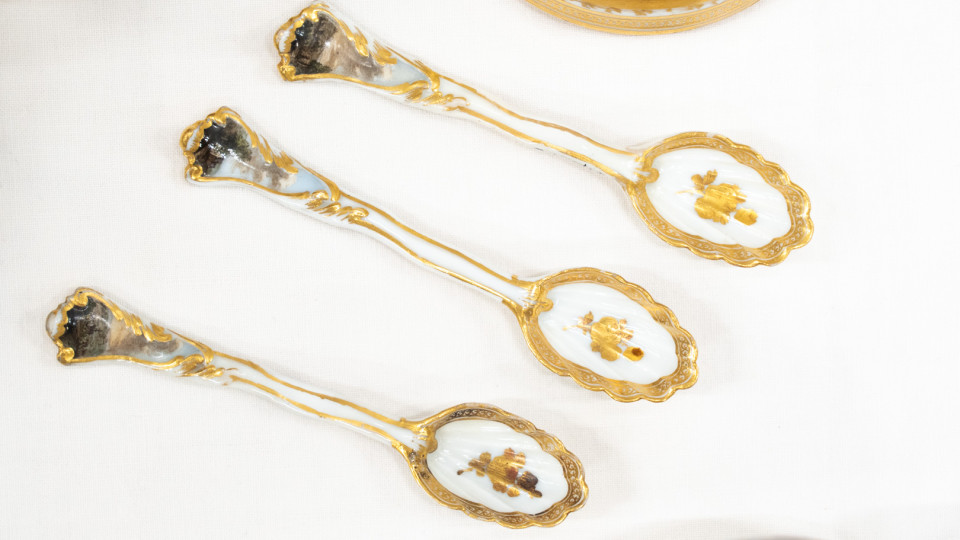
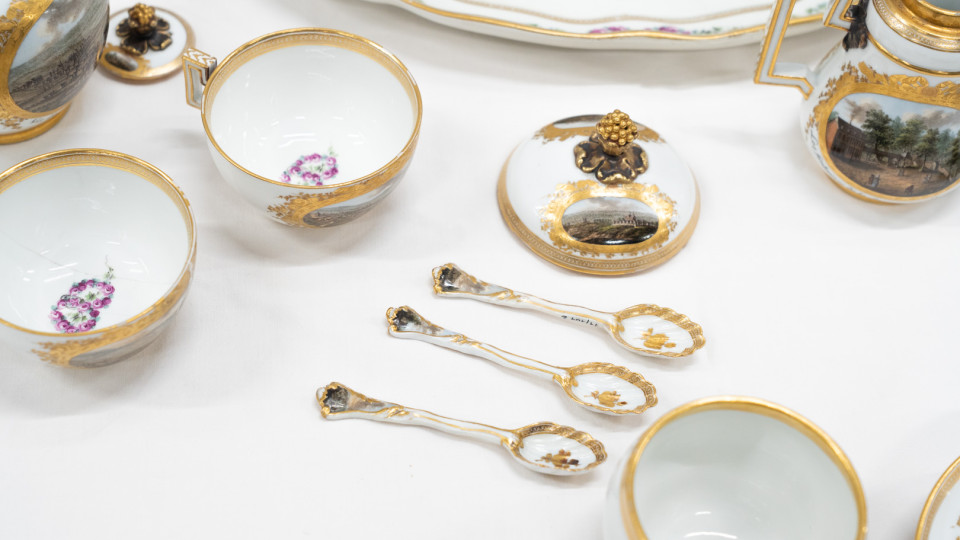
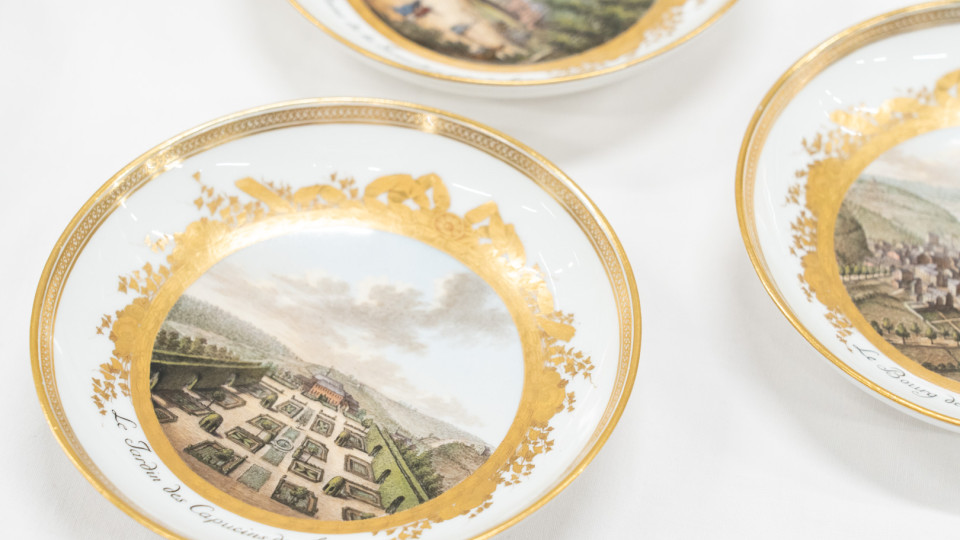
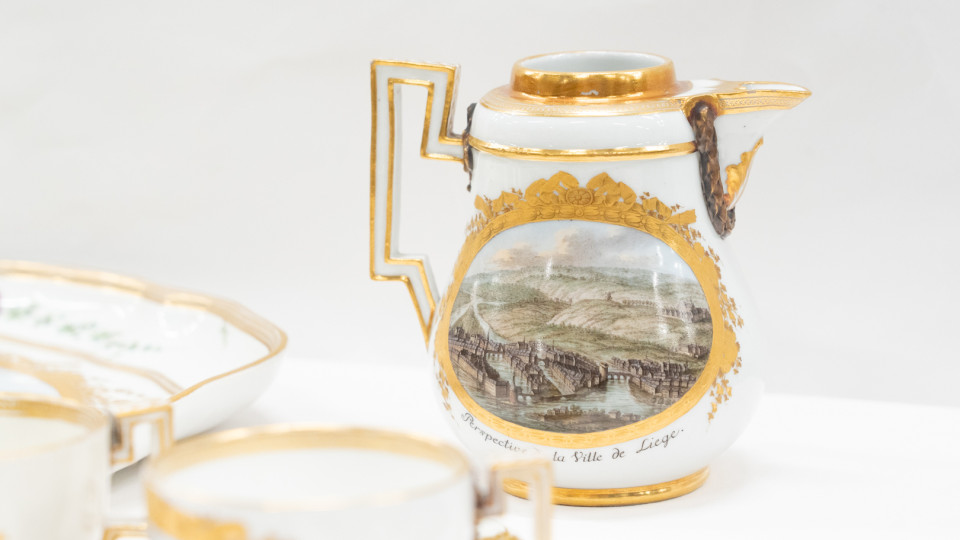
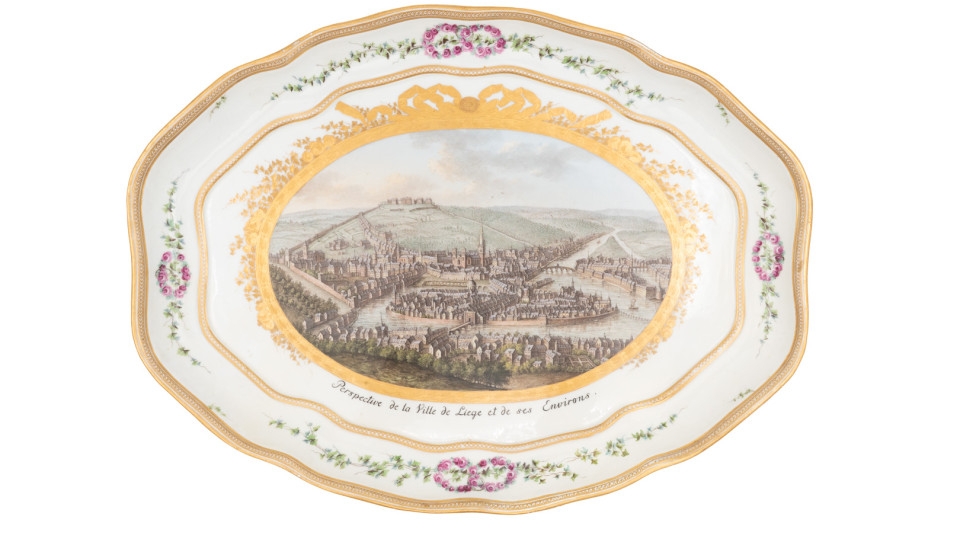
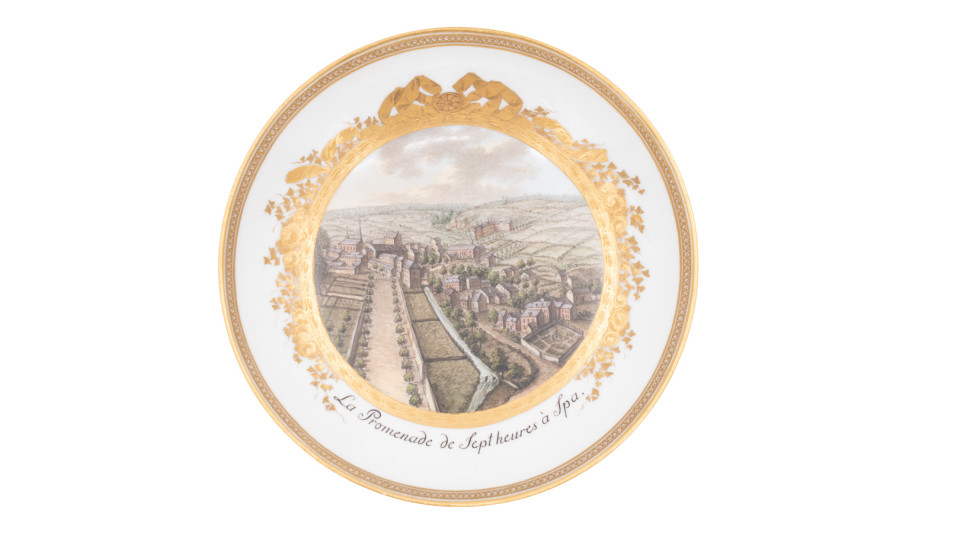
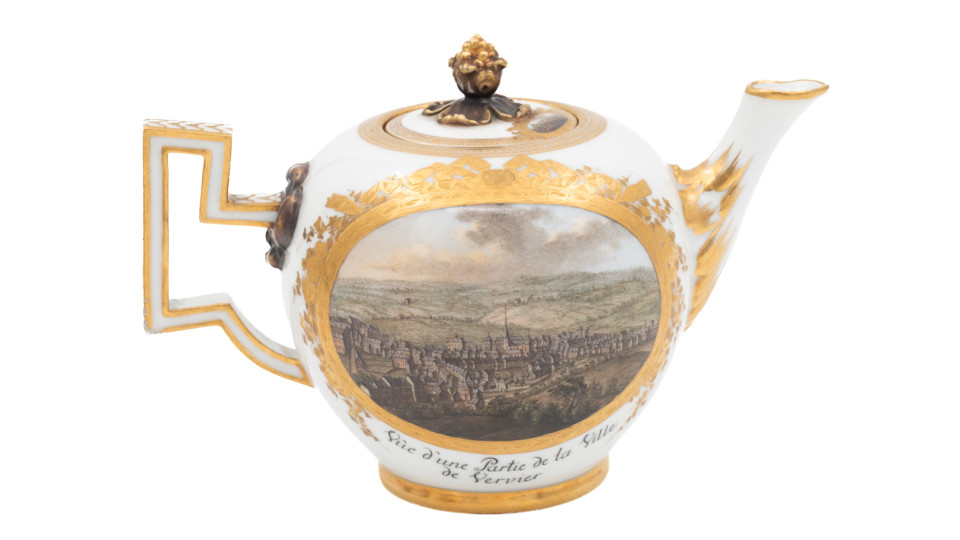
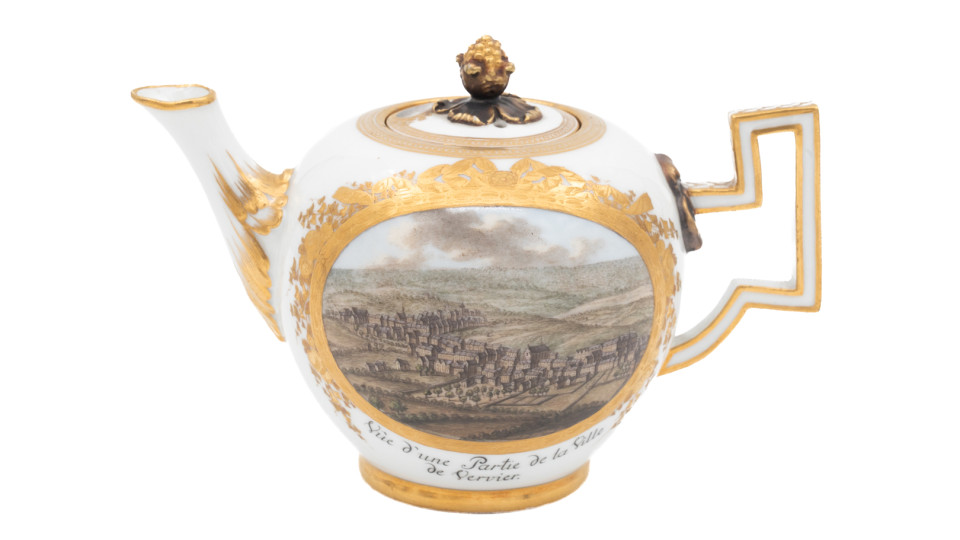
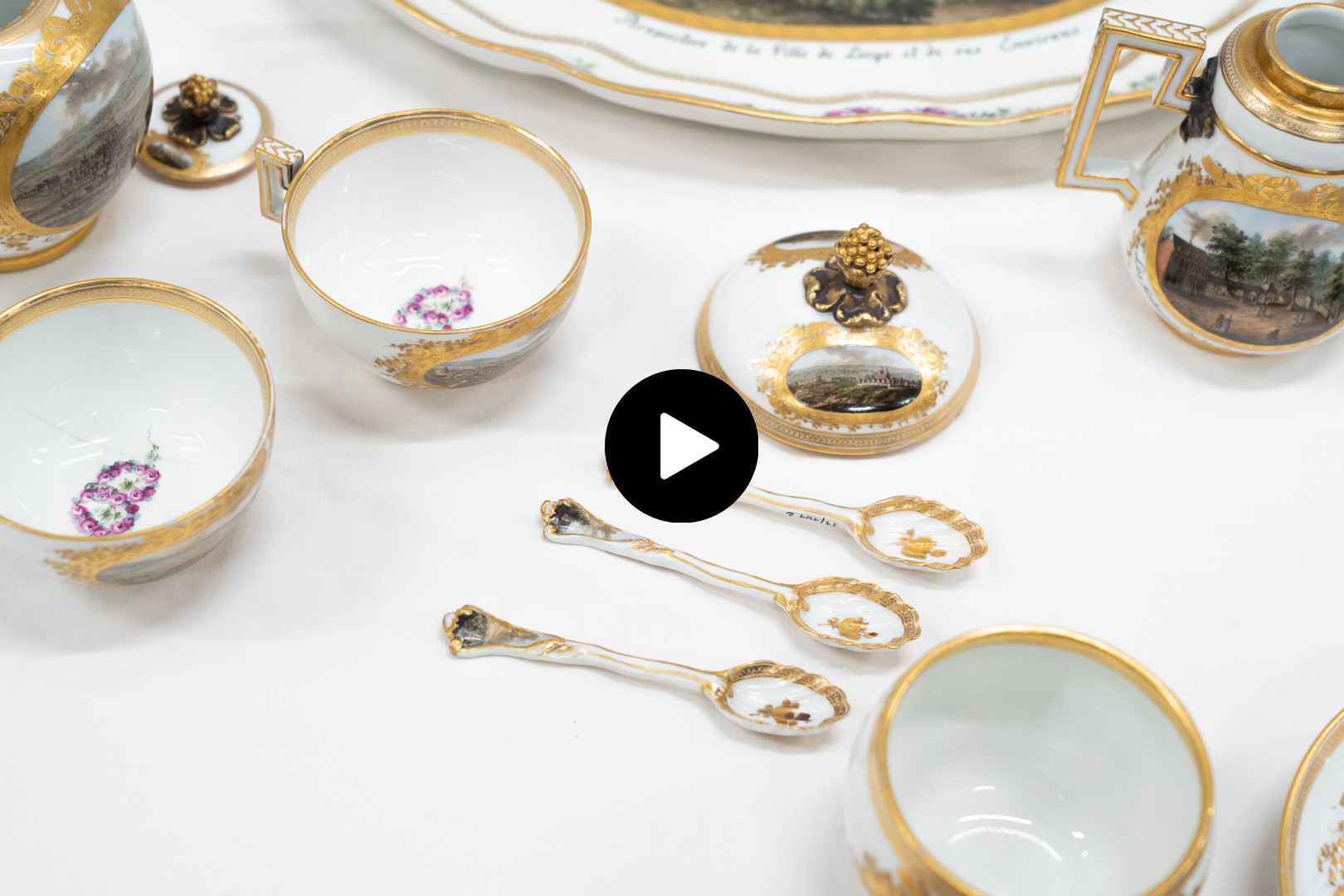
The 16 pieces that make up this coffee and tea service1 were manufactured by the famous Royal Porcelain Manufactory of Meissen, as evidenced by the trademark of two crossed swords. Although the model is known elsewhere, its decoration is unique and was undoubtedly created especially for a wealthy patron from the Liège region, whose identity has now been forgotten. The polychrome roses and ivy decoration is complemented by gold motifs, the details of which are very finely polished with agate stone. Each container bears one or two different views of Liège or the surrounding towns and sites: Spa, Each container bears one or two different views of Liège or the surrounding towns and sites: Spa, Franchimont, Theux, Chaudfontaine and Verviers. These miniature landscapes of great finesse cover almost the entire surface of the white porcelain: even the spoons and small lids feature tiny landscapes that are so detailed that they deserve to be admired through a magnifying glass.
... inspired by local painters?
In the past, inspiration for landscapes was often sought in the work of Remacle Leloup (1694-1746). He enjoyed a certain degree of fame following the publication of the five-volume collection Délices du Païs de Liége, published between 1738 and 1744. This work, which recounts the geography, history and customs
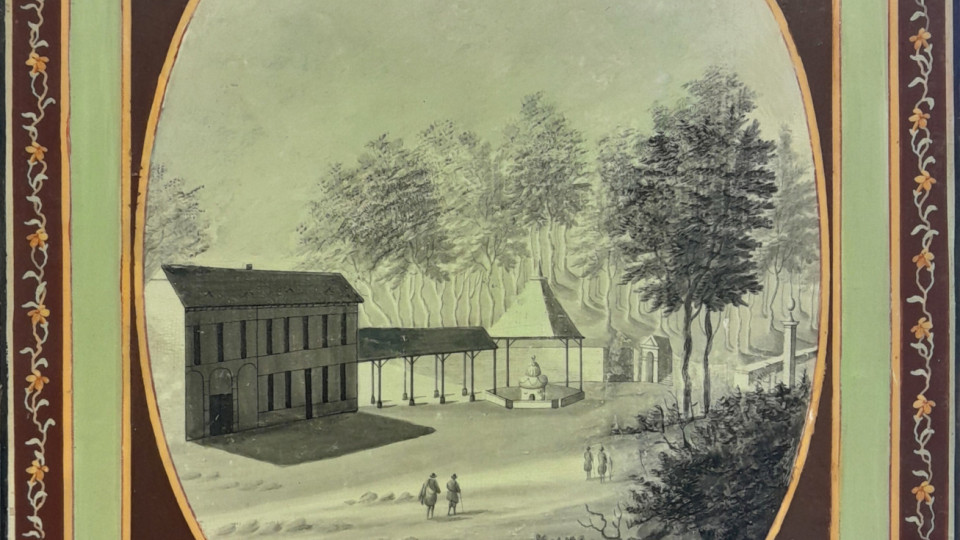
of our region, is almost entirely illustrated with engravings based on the work of this painter from Spa. The large view of Liège on the breakfast plate and the view of Verviers on the teapot are clearly based on R. Leloup's work. Some views are similar to those in Délices, such as the view of the Place de Spa on the coffee pot, but already feature more recent buildings. Other views, such as the promenades and fountains in Spa, do not correspond at all to those drawn by Remacle. A match can be found here in his son Antoine Leloup (1730-1802), a wood painter from Spa who was active at the time of the creation of the service.
Carmen Genten
Curator Department of Decorative Arts, Grand Curtius Museum
Carmen Genten
Conservatrice Département des Arts décoratifs du Grand Curtius
Object of the month on video
Location of the exhibition
The objects are on display in the object of the month showcase. Entrance hall of the Grand Curtius Museum in Liège.
Copyright des photos : Ville de Liège - Grand Curtius
Notes
1 Originally, the lunch service comprised 17 items, but the fourth spoon
was already missing when the service was acquired in 1971.
2 The Victoria and Albert Museum in London has a tête-à-tête of the same model, inv. no. 1328-1871, dating from 1789 and decorated with scenes from Johann Wolfgang von Goethe's novel, The Suffering of Young Werther.
Captions
Service à café et à thé “tête-à-tête”
Manufacture royale de porcelaine de Meissen
Porcelaine dure
Vers 1780
Marque de fabrique : Deux épées bleues entrecroisées et une étoile à six branches (période Marcolini)
N° d’inventaire 71/104
Collection Département des Arts décoratifs - Grand Curtius, Liège
Achat, 1971
Nécessaire à écrire et à coudre
Antoine Leloup (1730-1802)
Bois de Spa
2e moitié du 18e siècle
N° d’inventaire 2016/LP/032
Collection Département des Arts décoratifs - Grand Curtius, Liège
Don de Paulette et Louis Pironet, 2017
(couvercle de la grande boite et couvercle d’un boite intérieure)