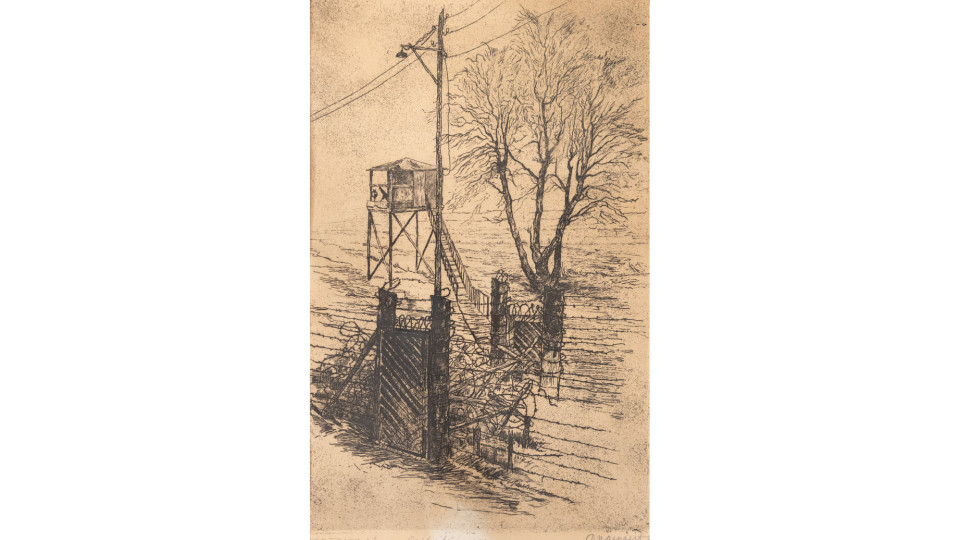
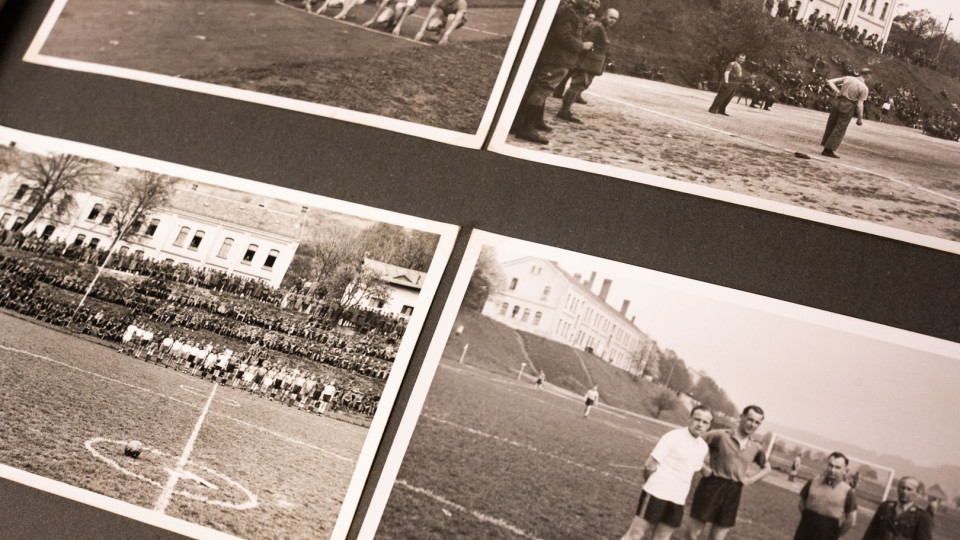
Drawing of the Oflag (a prisoner of war camp for officers) IIA and the photo album of Lieutenant Lambiotte
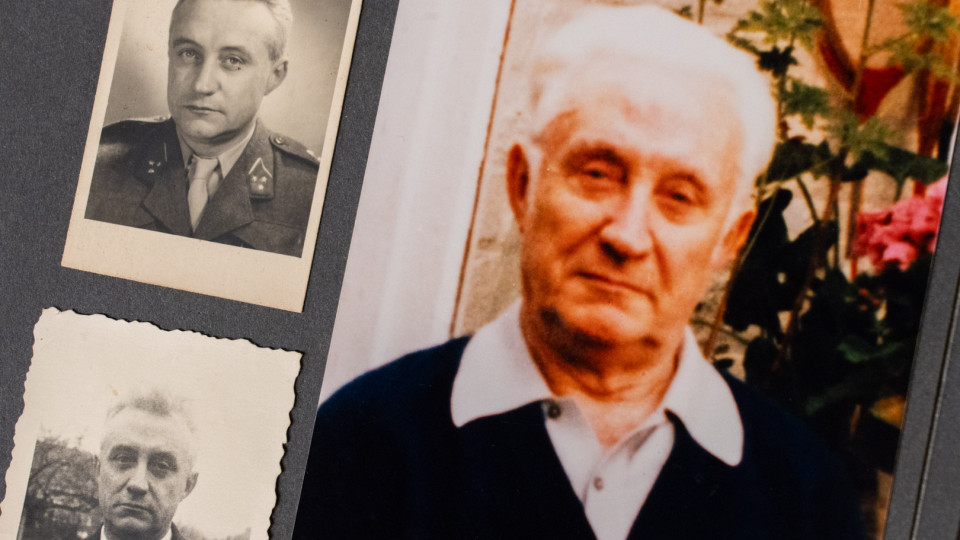
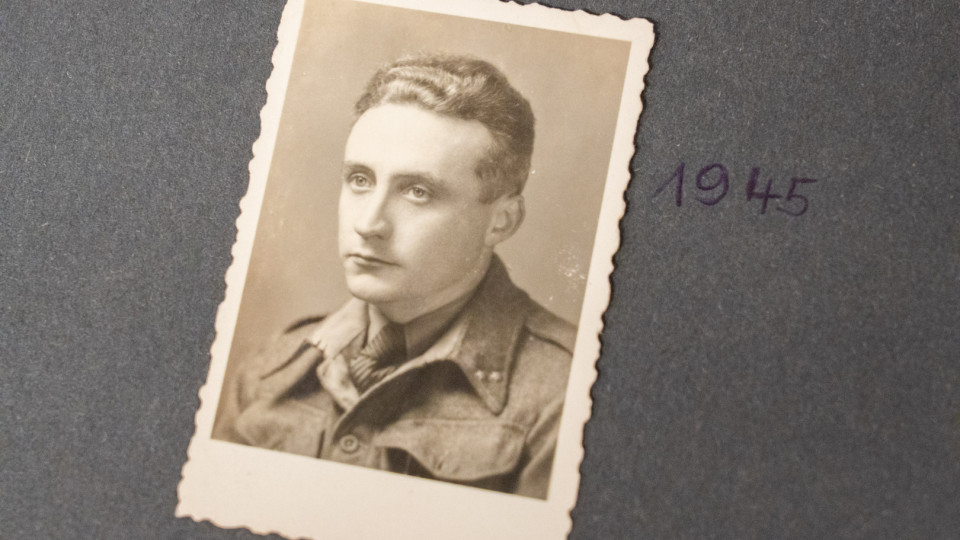
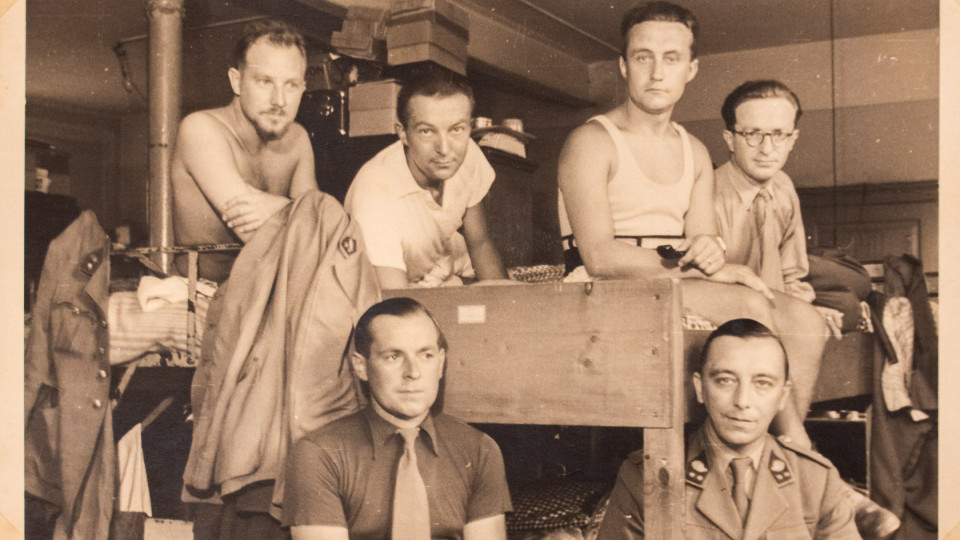
Lieutenant Emile Lambiotte had already done his training with the cyclists of the 10th line infantry regiment when the latter became the Ardennes armoured cavalry regiment in 1934. Though he was mobilised in August 1939, he was able to attend the birth of his daughter in January 1940 in Mazy, in the municipality of Gembloux, but did not see his family again for… five years.
During the invasion of May 1940, the Ardennes armoured cavalry regiment “resisted and bit back”, as their motto goes. Martelange, Bodange, Bastogne, Yvoir, la Lys and Vinkt were all places where the regiment (systematically under-equipped and outnumbered) gave the Wehrmacht a rough time. Thanks to these feats of arms, the officers in the Ardennes armoured cavalry regiment were allowed to keep their sabres when they surrendered on 28th May 1940. At this point in time, Lieutenant Lambiotte refused to go to England. He had no intention of abandoning his men to their fate. As soon as he was made captive, a Nazi officer confiscated his sabre, pushing the lieutenant's anger and frustration to the limit, but, faithful to the spirit of his regiment, the lieutenant did not forget this.
From then on, Lieutenant Lambiotte was imprisoned in several internment camps. To begin with, he was in Eichstätt (Offlag VIIb) in Bavaria. It was in this camp that his comrade Fosty drew the drawing on display. The album also on display demonstrates that, at least in the beginning, the living conditions were relatively good: decent accommodation, sporting activities, water-sport activities, authorisation of holy day celebrations… and taking of photos also. However, from 1942, conditions deteriorated as Nazi Germany suffered defeat after defeat. In 1943, Lieutenant Lambiotte was transferred to the Fischbek camp (Offlag Xd) near Hamburg before his final stage of captivity in the Prenslau camp in north Berlin (Offlag IIa).
The camp was liberated by the Soviets on 28th April 1945. However, it was left to its fate by the soldiers of the second Belarussian front, who ploughed forward on their advance to Berlin. The internees had to remain in the camp for several weeks (because the situation outside was very dangerous for unarmed men) before being handed over to the British troops. In the end, it took the officers three months to return to Belgium via what was referred to as the ‘ghost train’. Emile Lambiotte returned to Mazy, where he was only able to rest for one month before returning to duty.
This led him to guard German prisoners. One of them was a Luftwaffe officer (for the Nazi air force) and still wore his officer’s dagger. The armoured cavalry regiment officer, remembering the devil-may-care confiscation of his sabre five years before, felt he could finally take justice into his own hands by confiscating the dagger from the Nazi aviator.
Thereafter, Emile Lambiotte took part in the creation of the first Military Police company in Brussels. Indeed, along with other comrades, he was responsible for the protection of the then Prince Baudouin on the way to his oath-swearing ceremony.
The Nazi dagger has recently been donated to the Grand Curtius Museum by his son Jacques, accompanied by the photo album and drawing on display. Many thanks to him.
Loïc Servais
Curator of the Weapons Department
Exhibition location
The artefacts are visible in the object of the month showcase in the entrance hall of the Grand Curtius Museum in Liège.
Captions for visuals
Drawing of the Oflag (a prisoner of war camp for officers) IIA and the photo album of Lieutenant Lambiotte.
Copyright: City of Liège - Grand Curtius.